
Mammography is a branch of Radiology that involves the use of low-energy X-rays to see the inside of the breasts. This investigation is of growing popularity because it can be used to routinely check the breast for growths, lesions or calcifications without much associated risks.
Regular breast check-ups are vital for maintaining health and peace of mind, especially as you age. Breast cancer is a common concern worldwide, and this is what makes mammograms a big deal. This section will address some of the frequently asked questions on Mammography.
What is a Mammogram? #
A mammogram is an X-ray picture (image) of the breast. Like other X-ray based systems, a mammogram is acquired by using radiation to visualize the breast tissue. The major difference with Mammograms is that they use low-energy X-rays.
Mammography is typically the first choice for breast examinations.
How is a Mammogram Test Done? #
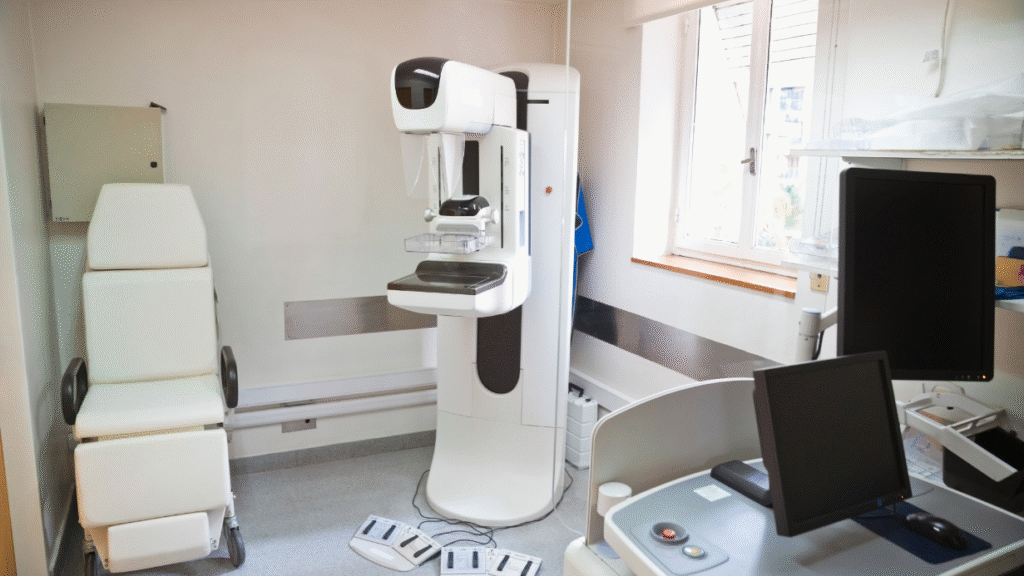
During a mammogram test, you will need to remove your shirt and place your breast on a designated area of the machine. This machine uses a compressor to flatten the breast to obtain clear X-ray images.
At What Point Should I Consider Getting a Mammogram? #
If you notice any changes in your breasts, it’s important to consult your doctor about getting a mammogram right away. Don’t wait, regardless of when you last had a mammogram, or when your next scheduled screening is.
What are the types of mammogram examinations we have? #
Generally, we can divide mammogram examinations into two types-
- Screening mammograms: These are routine exams for women without symptoms. Their goal is to detect early signs of breast cancer.
- Diagnostic mammograms: These are performed when there are signs of a breast abnormality, such as a lump or a suspicious finding on a screening mammogram.
What happens during a screening mammogram? #
Screening mammograms are quick and relatively painless. All that will be done is to take images of your breasts in a few positions.
Is there a difference in the procedure for screening and diagnostic mammograms? #
The basic procedure is the same for both types of mammograms. However, diagnostic mammograms often require more images to get a better look at the area of concern. This may lengthen your investigation time a little.
How Accurate Are Mammograms? #
While mammograms are an important screening tool, they do not catch every abnormality. There is still a slight possibility of missing a cancer. This is why you need to have your test done at an imaging center where the professionals involved are well trained. In cases like this, your doctor may suggest additional imaging like (MRI Breast and Breast Ultrasound) or even a biopsy to be double sure.
When Should I have my Mammogram? #
For routine (screening) mammograms, there are still debates on several questions that border on its necessity, and the appropriate age for it. There isn’t a one-size-fits-all answer to these questions. However, your screening schedule should be tailored to your age, risk factors, and other personal health considerations.
I don’t have a family history of breast cancer; do I still need a Mammogram? #
Yes. As long as you are a female, even if you don’t have a family history of breast cancer, it is still advisable to get a screening mammogram (often, once a year, once you clock forty years of age)
Studies suggest that most women who develop breast cancer do not have a family history of the disease. The more structured and regular your mammograms are, the higher the chance of early detection. For women who are at higher risk due to family history, priority should be given to getting yearly mammograms.
Are mammograms painful? #
Due to the pressure of the mammogram plates on the breasts, some women find it to be uncomfortable or even painful. To deal with this, for premenopausal women, it is advisable to time your mammogram to a time when your breasts are not too tender (this could be up to a week after your last menstrual period).
Providing feedback to the mammographer during the procedure can also help. If you experience unbearable pain during positioning for your test, politely ask the Mammographer (Radiographer) to consider re-adjusting and repositioning you to lessen the pain.
Why Does the Mammogram Machine Have to Squeeze my breasts? #
During a mammogram, your breast is gently compressed to reduce its thickness and minimize movement, which helps make any abnormalities more visible. This compression is brief, lasting only a few seconds. To make the process more comfortable, consider scheduling your mammogram for a time in your menstrual cycle when your breasts are less sensitive.
What is Digital Breast Tomosynthesis? #
Digital Breast Tomosynthesis (DBT) is a type of 3D mammogram that provides three-dimensional images of the breast. It offers higher quality images compared to traditional 2D mammograms. Despite the technical name, the procedure is quite similar to a regular mammogram, just with enhanced image detail. It is one of the go-to choices when dealing with dense breasts.
Can I eat before my Mammogram? #
This is a very common question. The good news is Yes, you can eat normally, as the test focuses solely on visualizing the breast and eating will not affect the results.
What do I wear for my test? #
For convenience, consider wearing a two-piece clothing (a top and a pant) instead of a gown. This is because we are only interested in the top half of your body where your breasts are. As such, it is easier for you to undress and redress. In the event that you are already in a gown, never worry, most mammographers will provide a hospital gown irrespective for you to wear.
Can I use Body Sprays, Deodorants, and Perfumes? #
While these are not absolutes and may vary from center to centre, it is advisable you avoid using deodorants, creams, perfumes, or body sprays on your upper body before the test, as these substances may interfere with image quality. Just ensure you come for the examination fresh and clean. If you choose to use perfume, apply it in areas not directly in contact with your skin.
Can I have a mammogram if I’m breastfeeding? #
Yes, it is completely safe to have a mammogram while breastfeeding. The radiation used in mammography does not remain in the breast or transfer to your baby. You can breastfeed before or after the test without any concerns.
Do I Need to Stop Taking My Medications Before the Test? #
No, you do not need to stop any medications before your mammogram. You can take your medications as usual. You may however inform the radiographer about the medications you are using.
What is dense breast tissue? #
Dense breast tissue means that your breasts have more fibrous and glandular tissue compared to fatty tissue. By itself, a dense breast is not a disease. It is also more common for women less than 50 years of age to have dense breasts (breast density decreases as you grow older).
I was told I have a dense breast; does it affect my mammogram? #
Yes. Dense breast tissue can make it more challenging to detect cancer using a mammogram. This is because both dense tissue and cancerous growths appear white on the X-ray images, which can make it harder for the mammogram to distinguish between them.
To improve accuracy, your doctor may recommend additional screening tests, such as a breast MRI, or a 3D mammogram, which can offer clearer views of the dense breast tissue.
I have a Breast Implant; can I still get a Mammogram? #
Yes, mammograms can still be done for women with breast implants. However, implants can obscure the view of the underlying breast tissue, your mammographer (radiographer) usually will carefully maneuver the implants to get clear images of the breast tissue.
If you have an implant and notice a lump in your breast, an ultrasound may be performed in addition to your mammogram. This is because ultrasound can often reveal lumps that might be hidden by the implants.
I once heard about questionnaires, what are they for? #
Before your mammogram, most imaging centers will need you to fill out a consent form or questionnaire. This is a standard procedure to provide the radiographer and reporting radiologist with any relevant information you might forget to mention. It also serves as a document that tells us you agreed to having the examination done.
I think I have had a mammogram just before the Present one? #
If you have had previous mammograms done at another facility, bring those results with you or provide the previous exam date and details if it was done at the same facility. This will help the radiologist with deciding if you actually need another mammogram, as well as, comparing your current mammogram with past images for a more comprehensive assessment.
Are there any risks associated with having a mammogram? #
As with any examination using ionizing radiation (like X-rays), there is some concern about radiation and cancer. However, the amount of radiation used in mammograms is very minimal, making the risk of causing cancer extremely low.
As long as you have mammograms in moderation, following all standard guidelines, there is no significant risk to worry about.
Will I need to do anything special after a mammogram? #
You can go about your day as usual after a mammogram. There is no need for any special post-test care, as the procedure involves only a physical examination of your breasts.
Who Are the Key Professionals in the Mammogram Process? #
Several medical professionals play a role in the mammogram process:
- Primary Care Providers: Your gynaecologist, nurse, or any other primary care provider can provide essential information about mammograms, including when to begin screenings and how often you should have them.
- Mammographer or Radiographer: This specialist is responsible for using the mammogram machine, positioning your breast and capturing the X-ray images during the mammogram.
- Radiologist: A radiologist is a doctor with specialized training who examines the acquired breast images by the Radiographer.
What if I prefer not to have a mammogram?
#
While mammography is the gold standard for breast examination for women above the age of 40, there are alternatives. A Breast MRI is a highly effective but more expensive option, and ultrasound can also be used. They also perform better or worse in certain situations. You can read more about that here.
Finally, self-exams, where you regularly check your breasts for lumps or unusual changes can be a useful supplement. However, these alternatives are generally considered complementary to, rather than a replacement for, mammography.