Radiotherapy
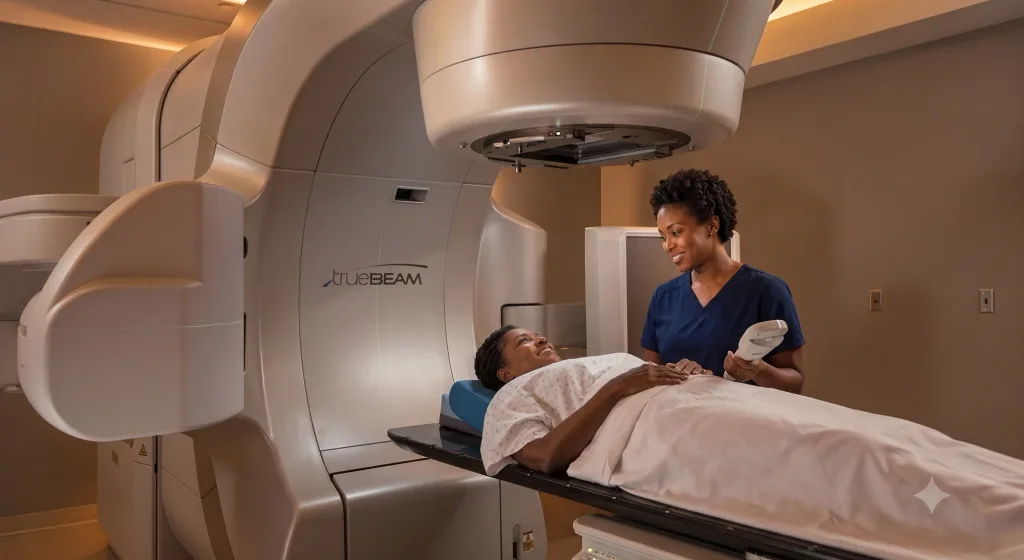
Radiotherapy, also called radiation therapy, uses carefully planned radiation to treat cancer or relieve symptoms caused by cancer. It is a treatment service rather than a diagnostic scan, but planning scans and imaging checks often help the team target the dose accurately.
Showing 12 of 19 guides
Brachytherapy is internal radiotherapy, where a radiation source is placed inside or very close to the area being treated. It can deliver a strong dose to the tumour while reducing dose to nearby healthy tissues.
Brain tumour radiotherapy uses carefully planned radiation to treat a tumour in the brain or cancer that has spread to the brain. Treatment may involve a mask, MRI-based planning, and close monitoring for swelling symptoms.
Breast cancer radiotherapy treats the breast, chest wall, or nearby lymph node areas after surgery or in selected treatment plans. It helps reduce the chance of cancer returning in the treated area.
Cervical cancer radiotherapy treats cancer in the cervix and nearby pelvic areas. It is often combined with chemotherapy and may include both external beam radiotherapy and brachytherapy.
Daily life during radiotherapy depends on your treatment area and how your body responds. Many people continue normal routines, but rest, food, skin care, transport, and clinic timing may need planning.
External beam radiotherapy treats cancer by aiming radiation at a specific part of the body from a machine outside you. It is painless during the session, but side effects can build up gradually over the treatment course.
Gamma Knife is a highly focused form of stereotactic radiosurgery used for selected brain conditions. It does not involve a surgical cut, despite the word knife.
Head and neck cancer radiotherapy treats cancers in areas like the throat, voice box, mouth, nose, or neck nodes. It often needs a custom mask and close support for swallowing, mouth care, and nutrition.
Image-guided radiotherapy uses quick imaging checks during treatment to confirm your position before radiation is given. It helps the team aim more accurately, especially when organs can shift slightly from day to day.
IMRT and VMAT are advanced forms of external beam radiotherapy. They shape the radiation dose around the tumour so nearby normal tissues can receive less radiation where possible.
Lung cancer radiotherapy treats cancer in the lung or chest using carefully planned radiation. It may be used to cure selected lung cancers, support other treatments, or relieve symptoms like pain, cough, or bleeding.
MR-LINAC treatment combines an MRI scanner with a radiotherapy machine. It lets the team see soft tissues during treatment and adapt the plan in selected cases.
7 guides remaining