CT stands for Computed Tomography. That sounds technical, but the idea is fairly simple: it uses X-rays and computer processing to create detailed cross-sectional pictures of the body.
Instead of one flat image, CT gives doctors slices. That extra detail is why it can answer questions that a standard X-ray cannot.
When CT is especially useful
CT is often ordered for:
- Head injury or stroke evaluation
- Severe chest or abdominal pain
- Kidney stones
- Internal bleeding
- Complicated infections
- Cancer staging
It is fast, which matters a lot in urgent care.
Why doctors choose CT
CT is good when the team needs:
- Speed
- Broad coverage of a body region
- Fine anatomic detail
- A better look at organs, vessels, and bones together
For many emergency problems, that combination is hard to beat.
What patients usually notice
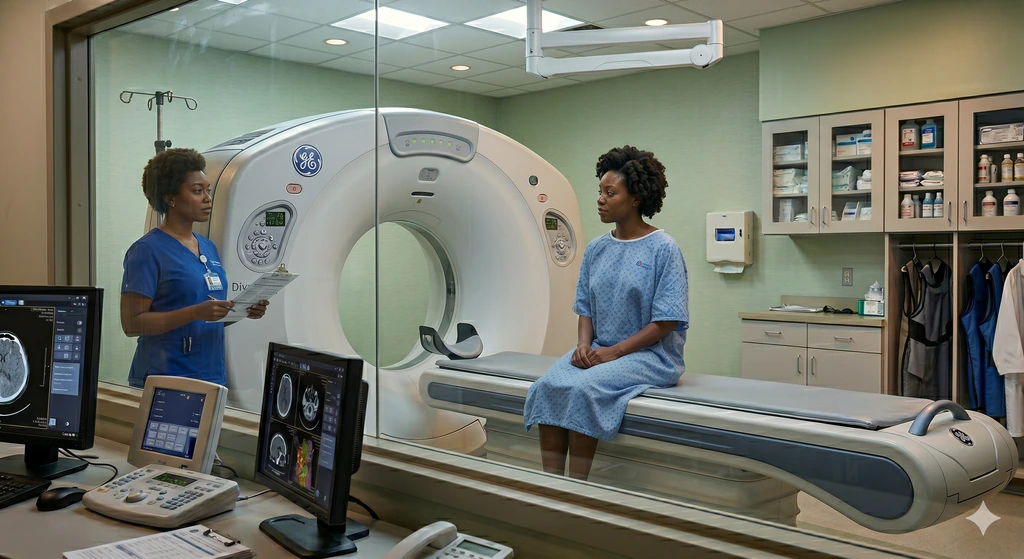
The machine is shaped like a wide ring. The table moves through it. Most scans are quick.
If contrast is used, you may feel warmth or a metallic taste for a short time. That part surprises people more than the scanner itself.
What CT does not automatically mean
A CT order does not always mean something terrible is being suspected.
Sometimes it is the fastest way to rule out dangerous causes and help everyone move on with more confidence.
The tradeoff
CT uses radiation, which is why doctors do not order it casually. But they also do not avoid it when it is clearly the best test.
The real question is not "Is radiation bad?" It is "Will this scan meaningfully improve care right now?"
The bottom line
CT is the workhorse for many urgent and complex questions. It is detailed, fast, and often chosen because it gives doctors the clearest next step when time and precision both matter.