
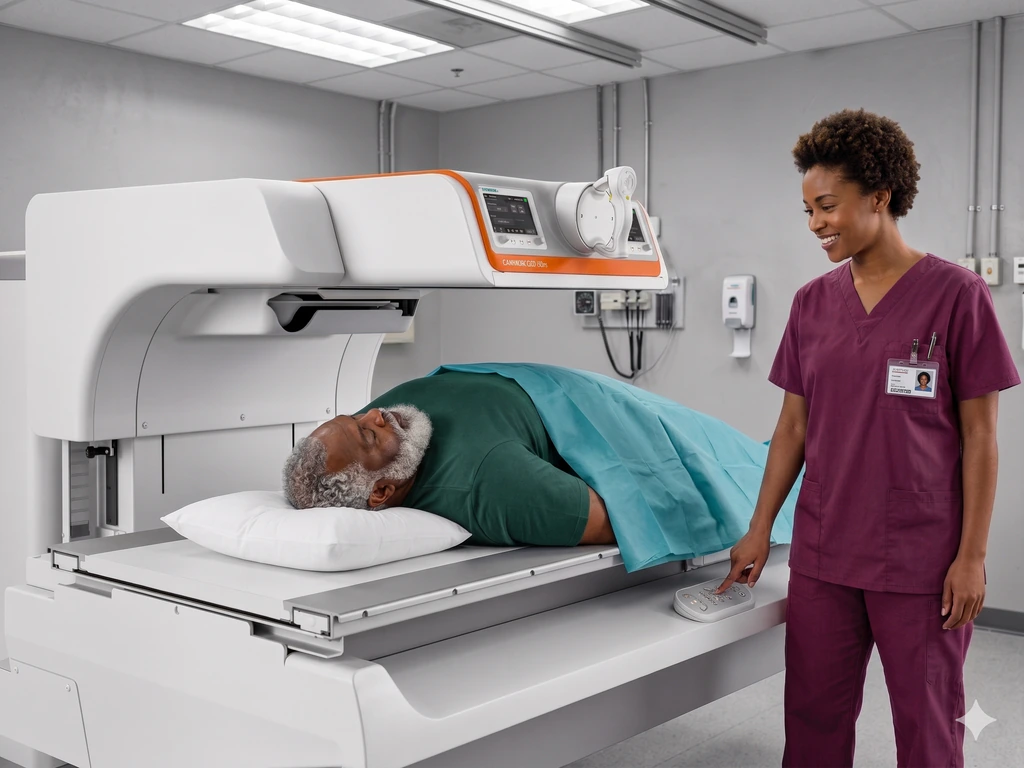
If a regular X-ray is a photograph, fluoroscopy is closer to a short movie.
It uses X-rays in real time so the team can watch contrast move through the body or guide instruments during a procedure.
What fluoroscopy is used for
Fluoroscopy commonly helps with:
- Swallowing studies
- Barium meal or follow-through exams
- HSG and other contrast studies
- Joint injections
- Some catheter-based procedures
The key difference is movement. Doctors are not just looking at a still image. They are watching how something behaves.
Why that matters
Sometimes the question is not only "What does this body part look like?"
It is also:
- Does the contrast pass through normally?
- Is something leaking or blocked?
- Can we guide this instrument safely to the right place?
That is where fluoroscopy becomes especially valuable.
What patients should expect
The setup depends on the exam. Some studies involve swallowing contrast. Others involve contrast placed into a specific body area by a clinician.
You may be asked to change position several times, hold still briefly, or follow specific instructions while images are taken.
Is radiation involved?
Yes. Fluoroscopy uses radiation, which is one reason the exam is done with a clear purpose rather than casually.
The team aims to keep the exposure as low as practical while still getting the information they need.
The bottom line
Fluoroscopy is not as famous as CT or MRI, but it fills an important role. When the question involves motion, contrast flow, or procedure guidance, it can be exactly the right tool.