
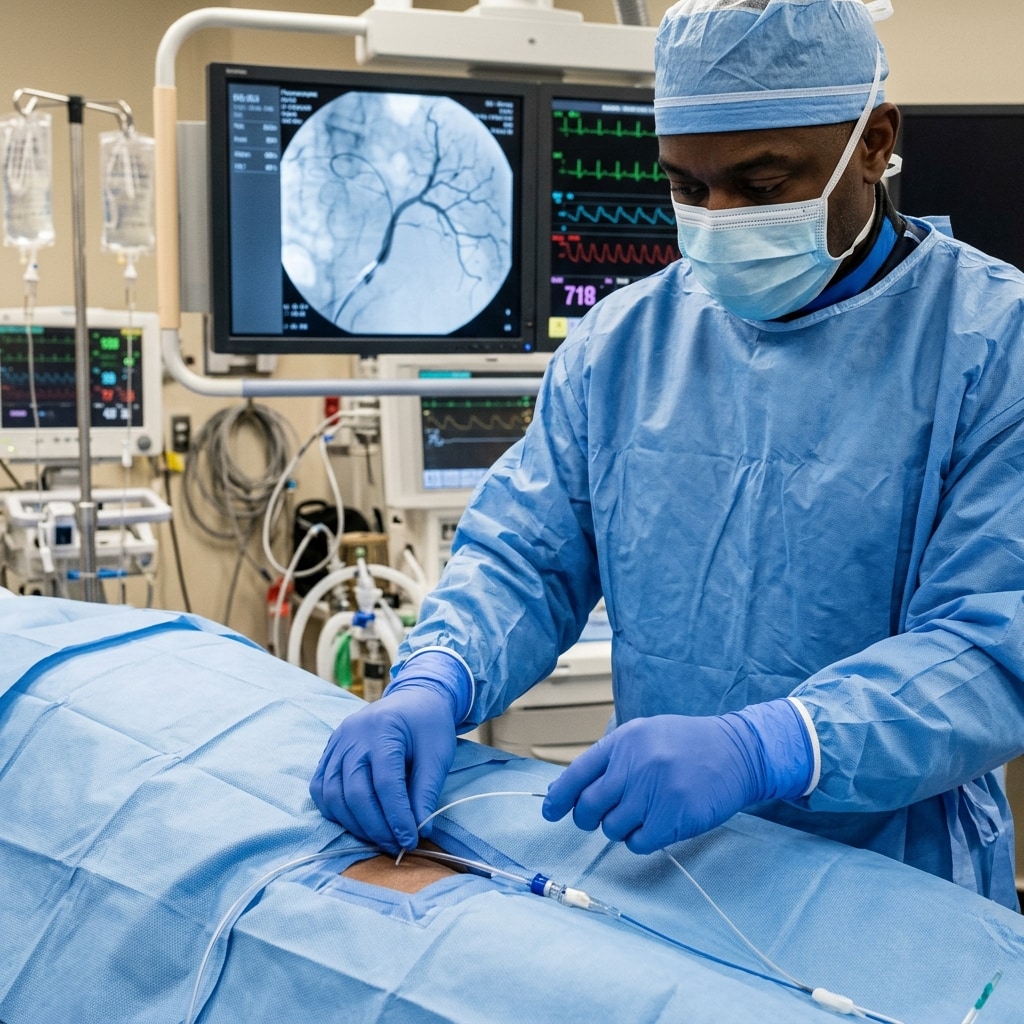
A nephrostomy tube passes through the skin of the back into a kidney so urine can drain into a bag. It may be needed when the normal route from the kidney to the bladder is blocked.
Before you leave hospital, you should be told who will change the dressing and bag, whether your tube needs flushing, and who to call if drainage stops. Those instructions take priority because nephrostomy tubes and care plans are not all the same.
Check the tube and drainage
Look at the tube, dressing, and bag each day. The tube should not be kinked or pulled tight. Keep the bag below kidney level and empty it before it becomes heavy enough to tug on the tube.
Notice what is usual for your urine. A small amount of blood can occur, particularly after insertion or tube movement, but new heavy bleeding, clots, or dark red urine needs urgent advice.
Keep the dressing clean, dry, and secure. Change it only as you were shown or arrange for the nurse responsible for your care to change it. Replace a wet, dirty, or loose dressing promptly.
Bathing and swimming instructions vary, but submerging the tube is commonly discouraged. Ask whether you may shower and which waterproof covering to use.
Flushing is not routine for everyone
Some nephrostomy tubes are flushed on a schedule, while others are flushed only when a trained clinician suspects blockage. Do not begin flushing because drainage looks slow unless your team has taught you to do so.
Use only the solution, syringe, amount, and method supplied by your team. Stop if there is pain or resistance. Never force fluid into the tube.
Do not try to push a tube back in if it has moved. Secure it to prevent further movement and seek urgent help.
When to get urgent medical advice
Contact your nephrostomy or urology team urgently if:
- urine stops draining or drops well below what is usual for you;
- urine leaks around the tube;
- the tube appears longer, moves, cracks, or comes out;
- you develop fever, chills, worsening back or side pain, or feel unwell;
- the skin becomes red, hot, swollen, painful, or produces discharge; or
- the urine becomes foul-smelling, very cloudy, heavily blood-stained, or contains clots.
A nephrostomy that has stopped draining may be time-sensitive. If the tube comes out completely, or you have severe pain, heavy bleeding, fainting, or signs of serious infection, seek emergency care.
The bottom line
The safest home routine is the one taught by the team responsible for your nephrostomy. Keep the tube free from pulling and kinks, watch the drainage, and know who to contact before a problem occurs.