
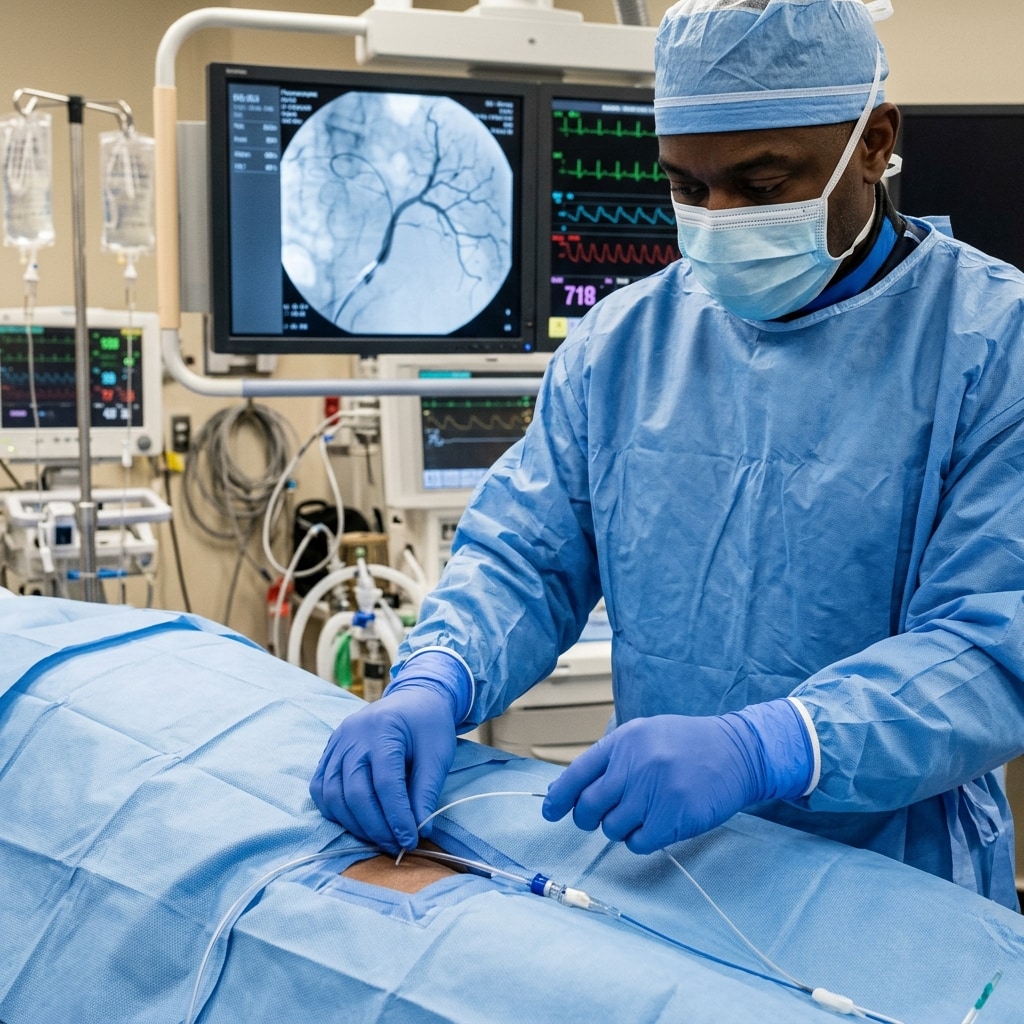
A PICC line or implanted port can reduce repeated needle sticks during chemotherapy, antibiotics, fluids, blood transfusions, or other treatment. Both connect to a large vein, but they do not sit in the body in the same way.
Knowing which device you have matters because the dressing, flushing schedule, and daily precautions are different.
The main difference
A PICC is a thin tube placed through a vein in the arm. Part of the line remains outside the skin and is covered by a dressing.
An implanted port, sometimes called a Port-a-Cath, sits completely under the skin, usually on the chest. A trained healthcare professional accesses it with a special needle when it is needed.
Looking after a PICC
Keep the dressing clean, dry, and secure. Do not submerge the line in bathwater or a swimming pool. Your team may allow showers with a waterproof cover, but the dressing itself should remain dry.
Check the site and the visible length of the line. Contact your care team if the dressing becomes wet or loose, the line looks longer than before, or the tubing cracks or leaks. Do not push a line back in.
PICC dressing changes, connector changes, and flushing should follow the schedule given by the team managing the line. Only flush or change the dressing yourself if you have been trained and given the correct supplies. Never force a flush against resistance.
Most ordinary arm movement is allowed. Ask your team about heavy lifting, repetitive exercise, blood pressure checks, and blood draws on that arm because recommendations depend on the device and your treatment.
Looking after an implanted port
While a port is accessed with a needle, keep the dressing clean and dry and avoid pulling on the tubing. When the needle has been removed and the insertion wound has healed, the skin over the port usually needs no special daily dressing.
An unused port still needs periodic flushing, but schedules vary by device, treatment plan, and local protocol. Use the interval given by your oncology or vascular-access team rather than a general online timetable.
Only a trained person should access the port. Tell the nurse if you feel pain, burning, or swelling while medicine is being given.
Signs that need prompt attention
Contact the team looking after your line promptly if you develop:
- fever, chills, or feel suddenly unwell;
- redness, warmth, discharge, worsening pain, or swelling at the site;
- swelling or pain in the arm, shoulder, neck, face, or chest on the device side;
- a wet dressing, leak, crack, or visible change in the line's position; or
- difficulty flushing or giving treatment through the device.
Seek emergency care for sudden chest pain, shortness of breath, fainting, or severe difficulty breathing.
The bottom line
A PICC needs protection where it leaves the skin. An implanted port usually needs little daily care once the incision has healed, but it still needs professional access and scheduled maintenance. Keep the contact details of the team responsible for your device close by.