
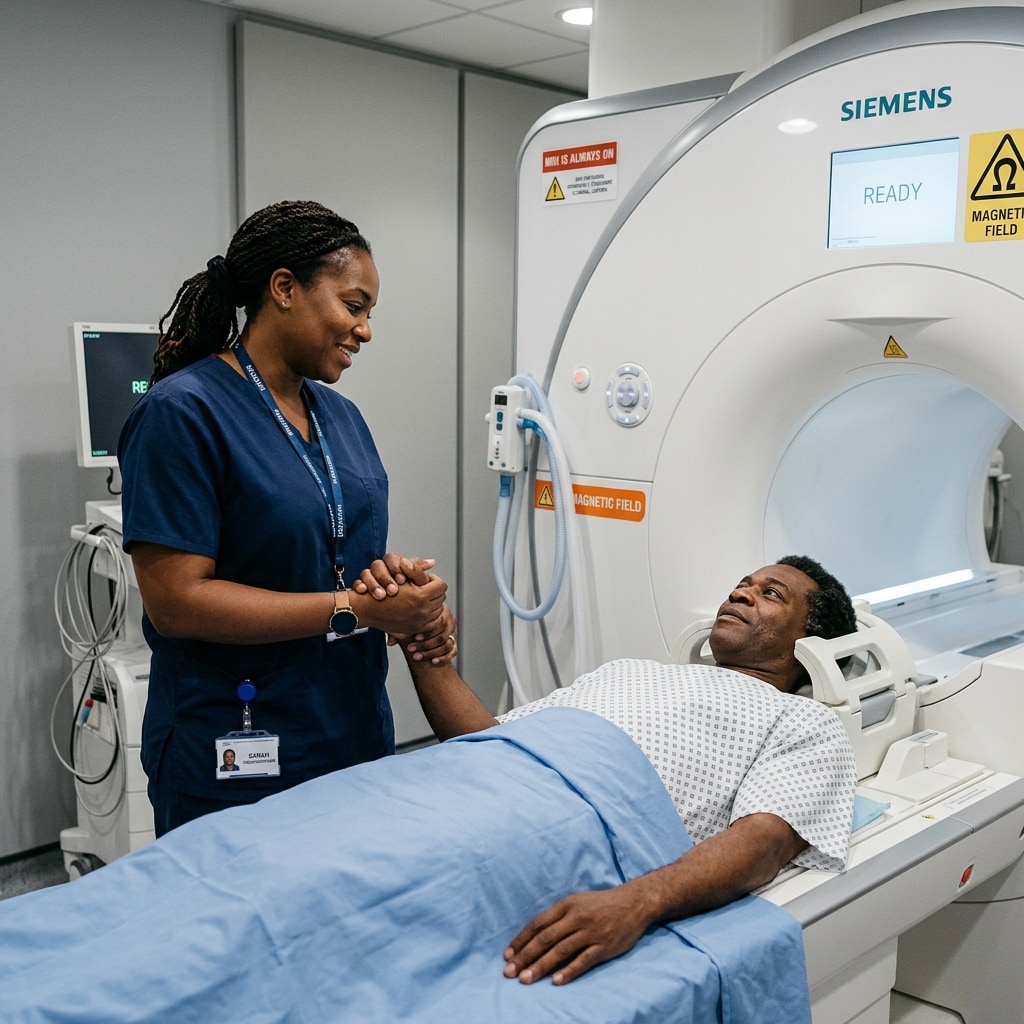
Some scans require a person to remain still for long enough to produce clear images. That may be difficult because of severe anxiety, claustrophobia, pain, involuntary movement, age, or developmental needs.
Sedation is one option, but it is not a single medicine or experience. The safest plan depends on the patient, the examination, and how deeply they need to be sedated.
Sedation can range from light to deep
A mild oral medicine may help an adult feel calmer while remaining awake. Intravenous sedation can cause greater drowsiness and requires closer monitoring. General anaesthesia makes the patient fully unconscious and is managed by an anaesthesia team.
Young children do not automatically need general anaesthesia, and adults do not always need only mild sedation. The team considers health history, previous experiences, scan length, and whether the person can keep still.
Preparation must come from the treating center
Fasting is often required for deeper sedation or general anaesthesia because food or liquid in the stomach can enter the lungs if protective reflexes are reduced. The permitted times for solid food, breast milk, formula, and clear liquids are different.
Do not rely on a general "six hours fasting" rule. Follow the center's written instruction, including advice about regular medicines. If the instruction is unclear or fasting was broken, call the center before travelling. The team will decide whether the scan can proceed safely.
Tell them about breathing or heart problems, sleep apnoea, reflux, previous anaesthesia problems, allergies, current medicines, recent illness, and any possibility of pregnancy.
What happens afterwards
Recovery time varies with the medicine and depth of sedation. Staff will monitor breathing, alertness, blood pressure, and other observations until it is safe to leave.
An adult receiving sedation will usually need a responsible person to take them home and stay with them. Driving, alcohol, operating machinery, signing important documents, and caring for a child alone may be restricted for the rest of the day or for 24 hours. Follow the discharge instruction you are given.
Children may be sleepy, unsteady, irritable, or occasionally more active than usual for a while. Keep them supervised and follow the team's advice about food, school, and physical activity.
The bottom line
Sedation can make an otherwise difficult scan possible, but it needs advance planning. Discuss the problem before the appointment so the center can decide whether coping support, a different scanner, medicine, or anaesthesia is the best fit.