
RadFAQS
Scan GuidesDictionaryFind a CenterTalk to a Radiographer
Find/Book
HomeScan GuidesDictionaryFind a CenterTalk to a RadiographerBooking Follow-Up
RadFAQS

Nigeria's radiology directory - helping patients find listed diagnostic centers, understand their scans, and take control of their health.

Modalities

  • CT Scan
  • MRI
  • DEXA
  • X-ray
  • Ultrasound
  • Fluoroscopy
  • Mammography
  • Nuclear Medicine
  • Interventional Radiology
  • Radiotherapy

Platform

  • Find/Book a Scan
  • Talk to a Radiographer
  • Booking Follow-Up
  • Volunteer

Portals

  • Center Login

Stay in the Know

Get updates on new centers, health tips, and platform news.

support@RadFAQS.comWhatsApp Us
© 2026 RadFAQS. All rights reserved.
Privacy PolicyTerms of UseRefund PolicyAbout
Back to Articles
Before Your Scan

What represents a 'Full Bladder' before an Ultrasound?

TO
Written by Taiwo Oluwayemisi, B.Sc Radiography
·
Medically reviewed by Olusegun Samuel Faith, M.Sc (Medical Imaging), MPH, PgDip (MRI)· Last reviewed 12 Apr 2026
What represents a 'Full Bladder' before an Ultrasound?

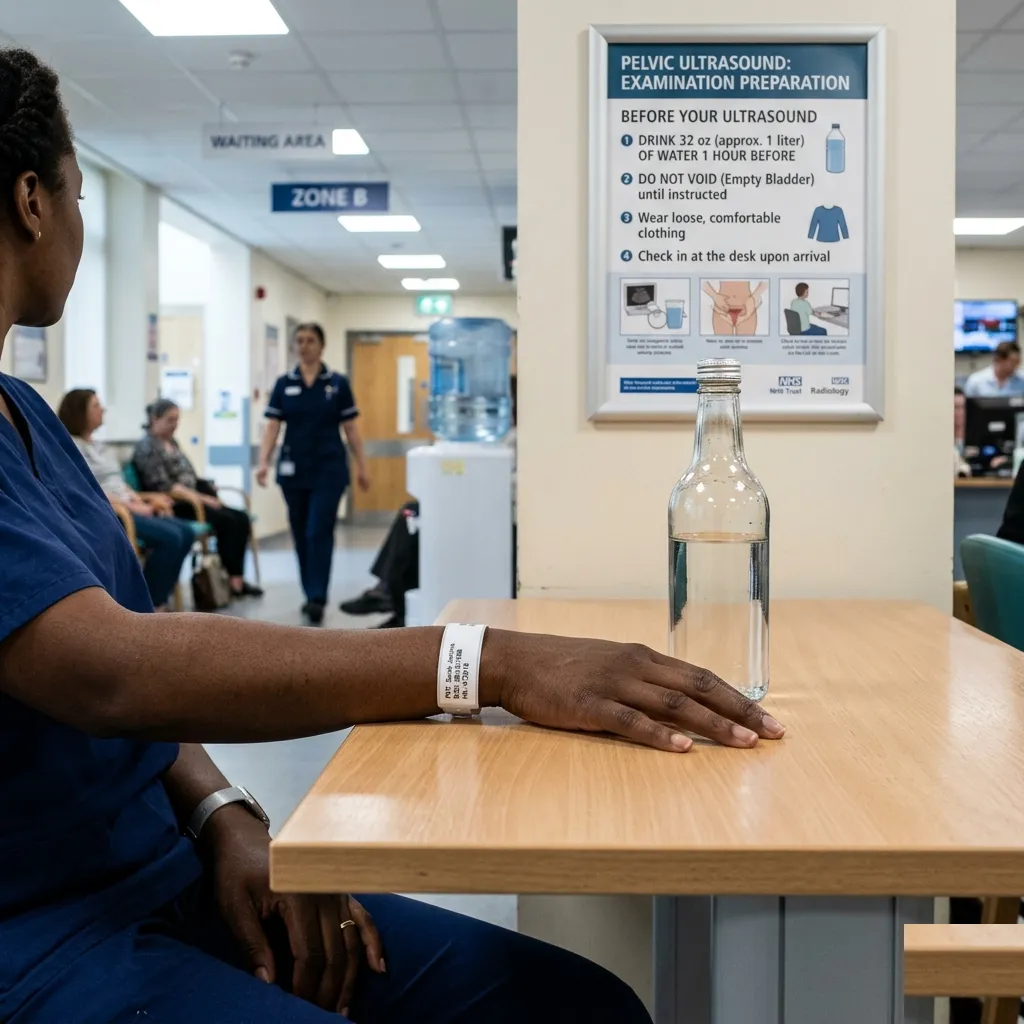
You've just been handed your appointment slip for a pelvic ultrasound. Printed in bold red letters at the bottom is the golden rule: "Attend with a full bladder."

But what does that actually mean?

The Anatomy of the Scan

To see your pelvic organs (like the uterus, ovaries, or prostate), the sound waves from the ultrasound probe need a clear pathway. The bowel, which is filled with gas, obscures these organs.

A full bladder acts as an "acoustic window." It pushes the gas-filled bowel out of the way, creating a perfect, fluid-filled lens through which the sonographer can get crisp, clear images of the structures underneath.

How to Get It Right

  • Drink roughly 32 ounces (about 1 liter) of water 60 to 90 minutes before your exam.
  • Don't chug it right before you walk in! It takes passing time for the water to travel from your stomach, through your kidneys, and into your bladder.
  • If you feel an uncomfortable, almost urgent need to use the restroom, your bladder is perfectly full.

Pro-tip: Don't overdo it. If you're in severe pain, you've drunk too much. Just inform the receptionist and they will usually let you relieve just a tiny bit to stay comfortable!

Radiology education only

RadFAQS explains radiology terms, scan preparation, and what patients commonly experience. It is not a diagnosis, treatment plan, or replacement for your referring doctor, radiologist, or care team. RadFAQS does not monitor this site for emergencies and cannot respond in real time. If symptoms are severe, worsening, or urgent, do not wait for a reply here — contact a healthcare professional or emergency service immediately.

Related FAQ guides

ultrasound

Pelvic Ultrasound

A Pelvic Ultrasound looks at the organs in your lower abdomen, including the uterus, ovaries, bladder, and prostate. It bounces sound waves off your internal organs to create clear pictures of the soft tissues in your pelvis.

ultrasound

3D/4D Obstetric Ultrasound

A 3D/4D obstetric ultrasound is an optional scan that provides three-dimensional, moving images of your baby in the womb. It lets you see your baby's facial features, expressions, and movements in real-time.

ultrasound

Abdominal Ultrasound

An Abdominal Ultrasound examines the major organs in your belly, such as your liver, gallbladder, pancreas, and spleen. This quick test paints a picture of your digestive and filtration organs using sound waves.

ultrasound

Breast Ultrasound

A Breast Ultrasound uses sound waves to evaluate breast tissue, often acting as a companion test to a standard mammogram. It helps doctors take a much closer look at a specific lump or area of concern to figure out exactly what it is.

Related dictionary terms

Procedure

Ultrasound

Ultrasound uses sound waves to create real-time images of organs, soft tissues, pregnancy, and blood flow.