
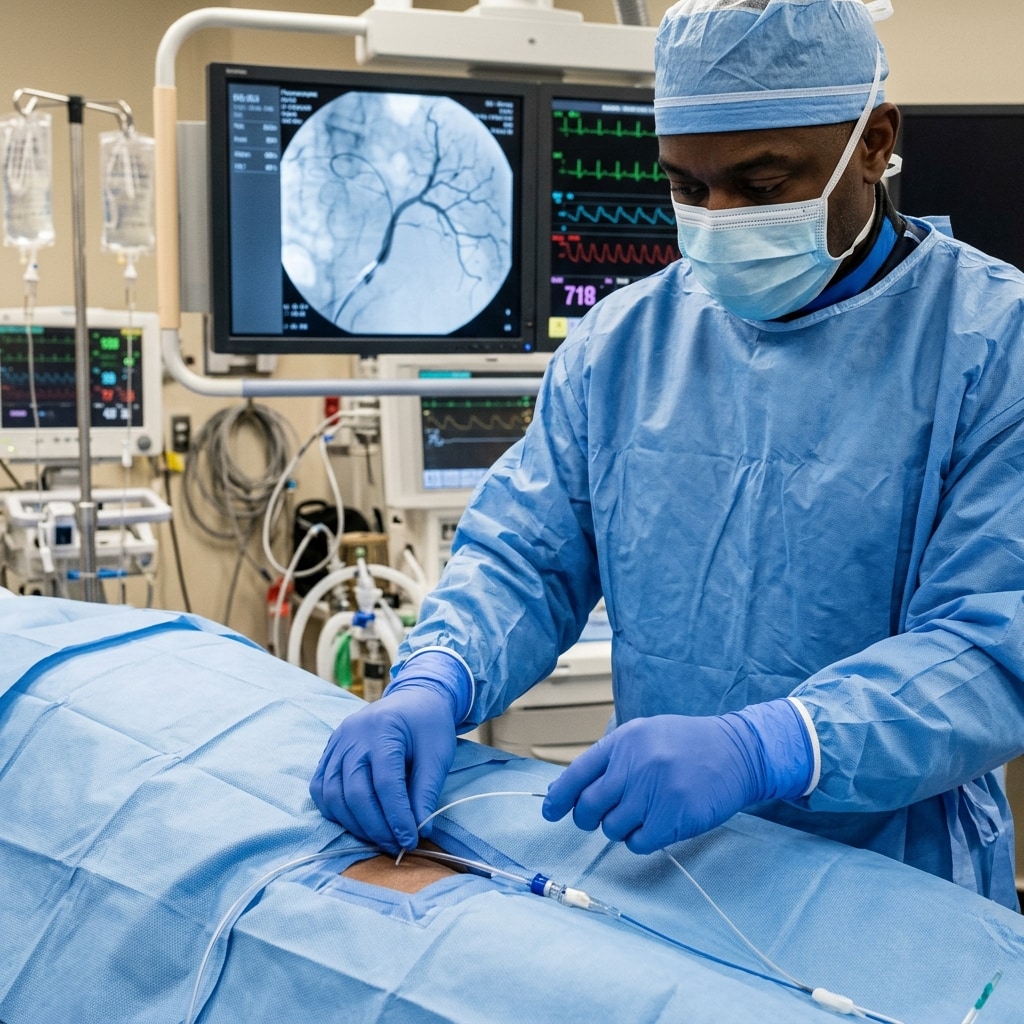
Many people assume radiology ends with a report. Interventional Radiology proves otherwise.
It is a field where doctors use imaging guidance to perform treatments through tiny access points in the skin instead of large open incisions.
What Interventional Radiology can do
Depending on the problem, IR may help with:
- Draining infected fluid collections
- Stopping bleeding
- Taking targeted biopsies
- Opening blocked ducts or vessels
- Treating some fibroids or tumors
- Placing feeding tubes or drainage catheters
The exact procedures vary, but the idea is consistent: use imaging to get to the right place precisely.
Why patients are often referred for it
Interventional Radiology can sometimes offer:
- Smaller wounds
- Shorter recovery
- Less pain
- Less time in hospital
That does not make it "minor" in the casual sense. It still requires expertise and planning. It just approaches the body more strategically.
What the imaging contributes
The imaging is not decoration. It is the map.
Ultrasound, fluoroscopy, CT, or other guidance methods help the doctor navigate instruments safely while avoiding structures that should not be disturbed.
What recovery may look like
Recovery depends on the procedure. Some people go home the same day. Others need monitoring, medications, or follow-up imaging.
The procedure may be less invasive than surgery, but the aftercare still matters.
The bottom line
IR is one of the clearest examples of how modern imaging changes care. It allows doctors to treat certain problems with precision and less disruption to the body than older approaches often required.