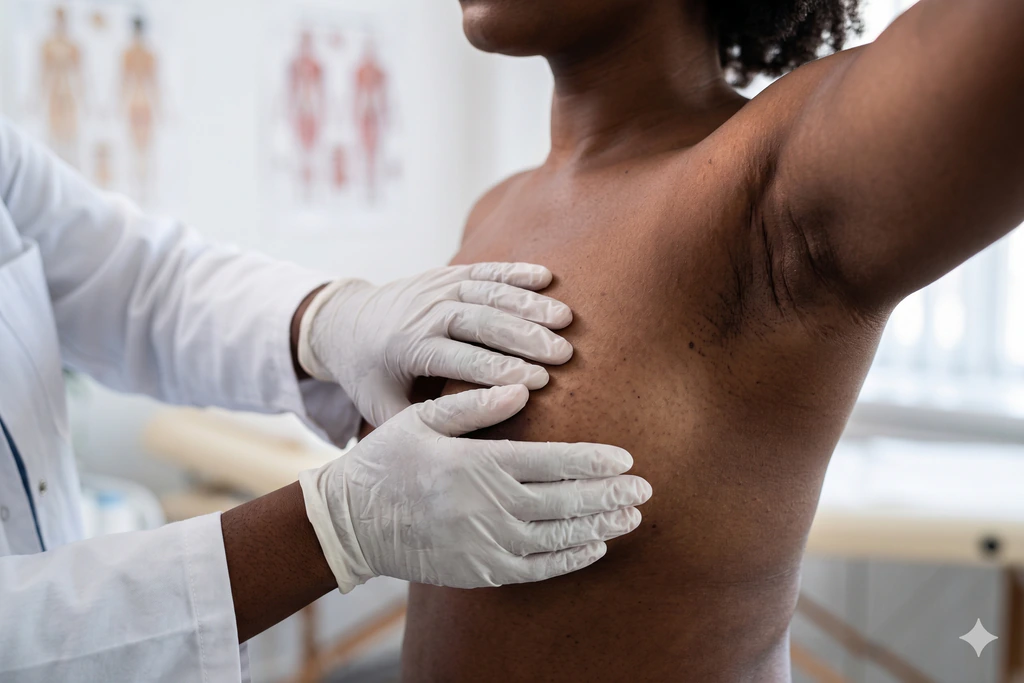
Breast cancer care often begins with a concern, a screening result, or a symptom. From that point forward, imaging plays a role at several stages, not just the first one.
Where radiology enters the picture
Radiology helps with:
- Early detection through screening mammography
- Clarifying abnormalities with diagnostic mammography and ultrasound
- MRI in selected patients
- Guiding biopsies
- Helping assess the extent of disease
In other words, imaging is not only about spotting a problem. It is also about making the next step more precise.
Why biopsy still matters
Imaging can strongly suggest whether something is suspicious, but a definite diagnosis of breast cancer usually requires tissue sampling.
That is why radiologists may recommend or help perform:
- Ultrasound-guided biopsy
- Stereotactic biopsy
- MRI-guided biopsy in selected situations
How care is usually planned
Once cancer is confirmed, management may include a combination of:
- Surgery
- Radiation therapy
- Hormone therapy
- Chemotherapy
- Targeted treatment
The exact plan depends on the cancer type, stage, receptor status, lymph node involvement, and the patient’s overall health.
Why imaging still matters after diagnosis
Radiology may still be used to:
- Check the extent of disease
- Help with surgical planning
- Assess treatment response
- Monitor after treatment when needed
Why patients often feel overwhelmed
Breast imaging reports can create anxiety because they often introduce new terms, new follow-up steps, and a lot of waiting.
That is why it helps to think in stages: detection, diagnosis, treatment planning, then follow-up.
The bottom line
Radiology is deeply woven into breast cancer care. It helps detect problems, guide biopsy, define the extent of disease, and support treatment planning with more precision.