
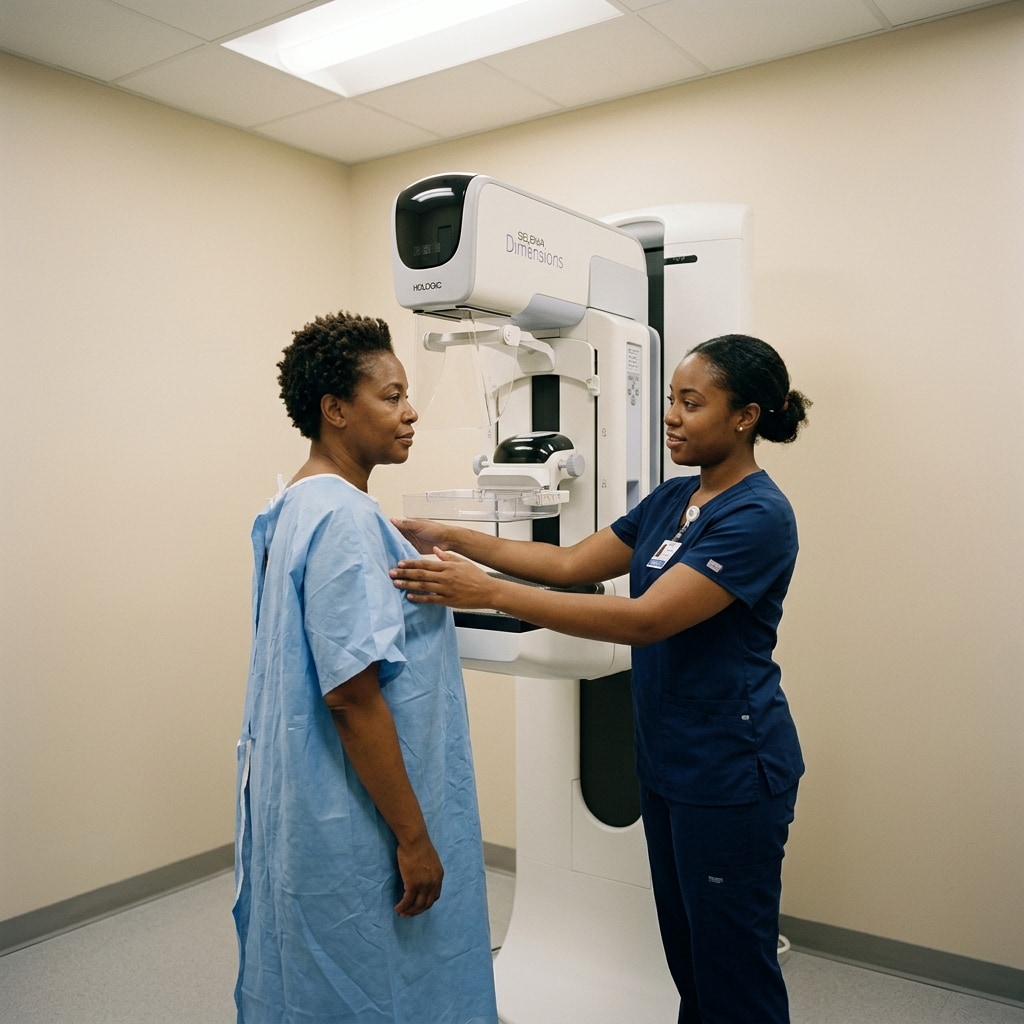
Breast ultrasound and mammography are not two versions of the same test. They create different kinds of images, so one may answer a question that the other cannot.
The choice depends on whether the examination is routine screening or an investigation of a symptom. Age, pregnancy, breast density, personal risk, and previous results also matter.
What mammography shows
A mammogram is a low-dose X-ray of the breast. The breast is compressed between two plates for a few seconds. Spreading the tissue out reduces overlap and helps produce a clearer image.
Mammography can show masses, changes in breast structure, and small calcifications that may not be visible on ultrasound. It is the main breast cancer screening test for people in the recommended age and risk groups.
Dense breast tissue and some abnormalities can both appear white on a mammogram. This can make the images harder to interpret and may lead to additional imaging.
What breast ultrasound shows
Ultrasound uses sound waves and does not use ionising radiation. It can help determine whether a lump is a fluid-filled cyst or a solid mass, examine a specific area seen on a mammogram, and guide a needle biopsy when needed.
It is often the first examination for a breast lump in a younger person or during pregnancy. Mammography may still be added depending on age, risk, symptoms, and what the ultrasound shows.
Ultrasound does not show every type of calcification and does not replace mammography for routine screening in most average-risk people.
Why you may need both
For someone in a screening age group, mammography is usually the starting point. If it shows an area that needs a closer look, targeted ultrasound may help determine whether it is a cyst, a solid mass, or normal tissue.
For someone with a symptom, the team may choose ultrasound, diagnostic mammography, or both. MRI is sometimes added for a specific high-risk or diagnostic question.
The bottom line
Mammography and breast ultrasound provide different information and are often used together. Screening schedules vary by age, risk, and local guidance. Any new breast lump, nipple discharge, skin change, or persistent one-sided symptom should be assessed rather than waiting for the next routine screen.