
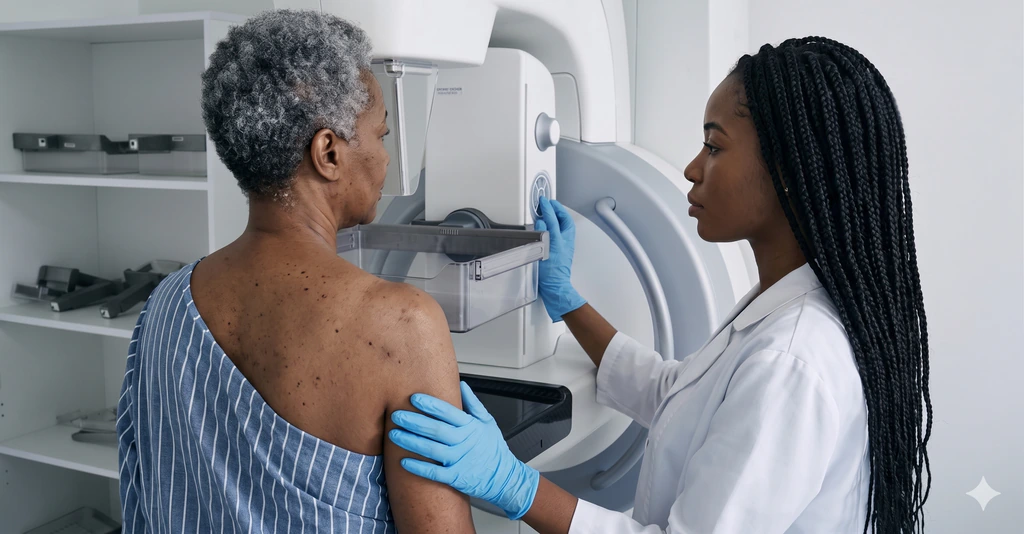
A screening mammogram looks for breast cancer before there are symptoms. It can show a small mass, distortion, or a pattern of calcifications that may not yet be felt during a breast examination.
Finding a cancer while it is smaller and has not spread may allow more treatment options. It does not guarantee that treatment will be simple, and mammography cannot find every breast cancer.
Screening and symptoms are different situations
Screening is for someone who has no new breast symptom. A new lump, bloody nipple discharge, nipple pulling inward, skin dimpling, or a persistent one-sided change needs medical assessment, even if the person is younger than the usual screening age or had a recent normal mammogram.
That assessment may involve diagnostic mammography, ultrasound, MRI, or biopsy. The choice depends on age, symptoms, breast density, pregnancy status, and previous results.
When should screening start?
Screening guidelines do not all use the same starting age or interval. Some recommend mammograms every two years from age 40 for people at average risk. Others support yearly screening from the mid-forties, with the option to start in the early forties.
Your country, available programme, and health history matter. A strong family history, a known inherited mutation, previous chest radiotherapy at a young age, or certain previous breast findings may mean earlier screening and sometimes MRI in addition to mammography.
Discuss your risk with a clinician rather than applying one age rule to everyone.
A callback does not mean cancer
Some screening mammograms need extra views or an ultrasound because an area was not fully assessed. Many callbacks turn out to be normal tissue or a benign change. The extra imaging is how the team reaches a clearer answer.
Screening also has limits. It can produce false alarms, and some cancers can be missed or may grow between scheduled examinations.
The bottom line
Mammography is an important way to find breast cancer before symptoms appear. The right schedule depends on your risk and the guidance used where you receive care, while any new breast symptom should be assessed without waiting for the next routine screen.